
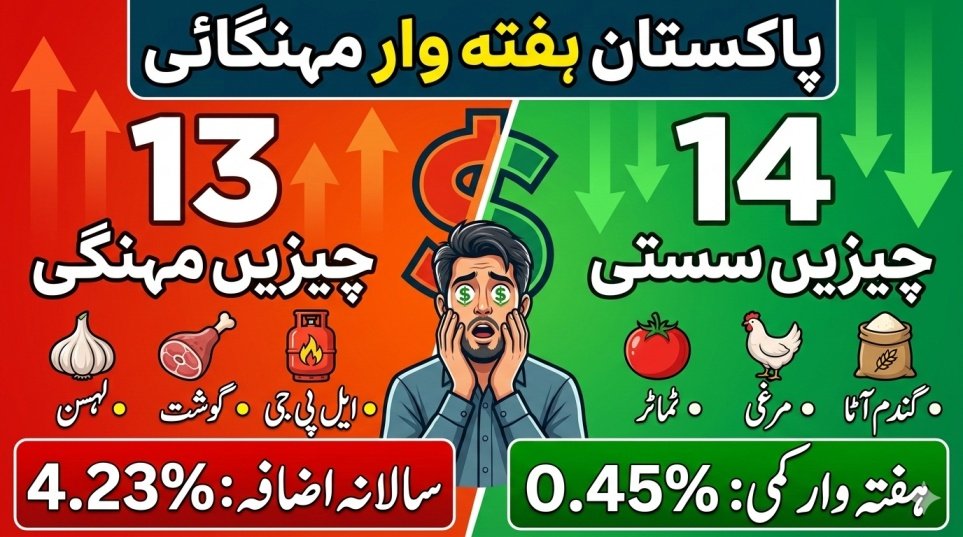
Today Update: Prices of 13 Essential Items Increase Across Pakistan – Weekly Inflation Update
Prices of 13 essential commodities increased in Pakistan during the past week, while 14 items recorded a price decrease, according to the latest report issued by the Pakistan Bureau of Statistics.
The weekly inflation data shows mixed trends in food and household items, with some daily-use products becoming more expensive and others offering slight relief to consumers.
13 Essential Items That Became Expensive
According to official figures, the following items saw a price increase last week:
- Garlic
- Mutton
- Beef
- Masoor pulse
- Mash pulse
- Yogurt
- Dry milk
- LPG
- Clothing items
The increase in meat and pulse prices has added pressure on household budgets, especially for middle- and lower-income families.
14 Items That Became Cheaper
On the other hand, prices of 14 items declined during the same period, offering partial relief to consumers.
Items that became cheaper include:
- Tomatoes
- Potatoes
- Chicken
- Onions
- Eggs
- Wheat flour
- Bread
- Sugar
The reduction in vegetable and poultry prices helped balance the weekly inflation trend.
Weekly Price Comparison
| کیٹیگری | تفصیل |
|---|---|
| مہنگی اشیاء | 13 چیزیں |
| سستی اشیاء | 14 چیزیں |
| ہفتہ وار مہنگائی میں کمی | 0.45 فیصد |
| سالانہ مہنگائی کی شرح | 4.23 فیصد |
| گندم آٹا سالانہ اضافہ | 29.81 فیصد |
| بجلی ٹیرف سالانہ اضافہ | 17 فیصد سے زائد |
Annual Inflation Highlights
On a yearly basis, several items recorded significant price increases:
- Wheat flour increased by 29.81%
- Tomatoes rose by 17%
- Red chili prices increased by 15%
- Bananas became 12% more expensive
- Mutton prices rose by 9%
- Jaggery increased by 8.36%
- Firewood prices went up by 11.40%
Additionally, utility charges also saw major hikes:
- Gas charges increased by 30%
- Electricity tariff increased by more than 17%
Inflation Trend
Despite the rise in several essential items, the weekly inflation rate declined by 0.45%, showing a slight improvement compared to the previous week. However, the annual inflation rate stands at 4.23%, indicating continued cost pressures over the longer term.
The latest data reflects ongoing fluctuations in food and energy prices, which continue to impact household expenses across the country.